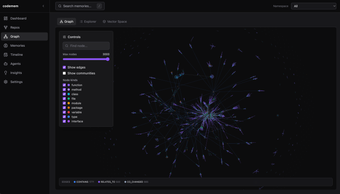
codemem: a local MCP server for persistent AI coding memory
codemem, developed by Cogniplex, provides persistent project context for AI coding assistants so conversations do not reset between sessions. It acts as an MCP-compliant local server that lets an assistant query earlier decisions and project notes during new interactions. The tool targets software developers and engineers who need continuity across multi-session workflows, keeping project intent accessible to automated agents and reducing repeated explanations during development work.
What tasks can you actually use it for?
codemem supports practical developer tasks that depend on continuity rather than ephemeral chat history. Typical uses include retrieving previously discussed code snippets, supplying past design notes to a running assistant, and locating earlier troubleshooting steps. The server presents a queryable memory the assistant can call to find definitions or prior solutions, helping teams keep long-running discussions and decisions available to automated workflows.
How reliable is the stored memory across sessions?
Schema-based storage makes saved entries machine-parseable so the assistant can reuse context with predictable structure. The server exposes search and retrieval endpoints that let agents locate relevant records instead of relying on ad hoc prompts. Persistence depends on the host filesystem and the server process that manages JSON or database files, so teams should combine codemem with their normal backup or version-control practices.
What inputs and clients does it require?
codemem is implemented in TypeScript/Node.js and requires an MCP-compatible client, for example Claude Desktop, to enable assistant interactions. It runs on Windows, macOS, and Linux hosts and writes memory to local JSON or database files per project. Correct MCP wiring between client and the server is a prerequisite, so compatibility with the chosen assistant client determines immediate usefulness.
Is it straightforward to host and fit into developer workflows?
The project is open-source and designed for developer inspection and extension, allowing teams to adapt storage schemas or add tooling around memory files. The implementation aims to be lightweight, suitable for local machines or low-footprint servers, and integrates with existing Node tooling. Expect configuration steps and some familiarity with Node and MCP clients to complete installation and adopt the persistent-memory workflow.
A practical foundation for teams invested in the MCP ecosystem
codemem is a practical option for developers who need persistent, inspectable project memory for AI-assisted coding. The server’s local, schema-backed approach and open-source model suit teams that prioritize control over memory data. Adoption depends on MCP client availability and ecosystem maturity, but its favorable reception among MCP developers suggests it serves projects that require long-term conversational continuity and auditability.
Pros
Project-scoped persistent memory keeps context available between sessions
Schema-based records produce machine-parseable memory entries
Cross-platform TypeScript/Node.js server for developer environments
Open-source design allows inspection and extension by teams
Cons
Requires an MCP-compatible client such as Claude Desktop
Relies on local file integrity and project backup practices
Needs Node.js familiarity for setup and customization
Laws concerning the use of this software vary from country to country. We do not encourage or condone the use of this program if it is in violation of these laws. Softonic may receive a referral fee if you click or buy any of the products featured here.